Good posture matters for your health and how you feel each day. When you slouch or sit incorrectly your body suffers in many ways. You might experience back pain or notice your blood doesn’t flow as well as it should. Your lungs may not work at full capacity either. The good news is that yoga offers an effective way to fix these problems. It helps you stand taller & makes your spine stronger. Five specific yoga poses can transform how you hold your body. These poses work by aligning your frame properly and building muscle strength where you need it most. When you practice them regularly you will notice real improvements in how you stand and sit. Your spine becomes healthier and your posture naturally gets better. Adding these poses to what you do every day doesn’t take much time. Even a few minutes of practice can make a difference. Your body will thank you for the attention and care. The benefits extend beyond just looking better. You’ll feel more comfortable throughout your day and have more energy.
1. Mountain Pose (Tadasana)
Why is Mountain Pose essential for good posture?

Mountain Pose forms the base of all standing yoga postures. Although it looks simple, it plays a powerful role in improving posture. This pose helps strengthen the legs, align the spine, and open the chest. By activating the core and lengthening the body upward, it enhances balance, stability, and overall posture awareness.
How to practice Mountain Pose:
– Stand upright with your feet placed hip-width apart.
– Distribute your weight evenly across all four corners of your feet.
– Engage your thigh muscles, gently lift your kneecaps, and lengthen your spine upward.
– Roll your shoulders back and down, keeping your arms relaxed by your sides.
– Look straight ahead, soften your facial muscles, and breathe deeply.
Benefits:
– Builds strength in the legs, core, and spine.
– Improves balance and body alignment awareness.
– Helps correct posture by straightening the spine and opening the chest.
2. Cat-Cow Pose (Marjaryasana–Bitilasana)
How does Cat-Cow Pose improve spinal health?
Cat-Cow Pose is a flowing sequence that moves the spine through flexion and extension. This gentle motion increases spinal mobility and flexibility, which are key factors in maintaining healthy posture. The rhythmic movement helps reduce stiffness, strengthens spinal muscles, and improves overall spinal function.
How to practice Cat-Cow Pose:
– Come onto all fours, positioning wrists under shoulders and knees under hips.
– Inhale and move into Cow Pose by dropping your belly, lifting your chest, and tilting your tailbone upward.
– Exhale into Cat Pose by rounding your spine, drawing your chin toward your chest, and pulling your navel inward.
– Continue moving slowly between these poses while syncing breath with movement.
Benefits:
– Enhances flexibility and movement of the spine.
– Eases tension in the neck and back.
– Activates core muscles that support proper posture.
3. Cobra Pose (Bhujangasana)
Why is Cobra Pose helpful for posture correction?
Cobra Pose is a gentle backbend that strengthens the lower back while opening the chest and shoulders. It stretches the spine and counters the effects of prolonged sitting and slouching. Practicing this pose regularly encourages better spinal alignment and an upright posture.
How to practice Cobra Pose:
– Lie face down with legs extended and feet placed hip-width apart.
– Place your palms on the mat beneath your shoulders, keeping elbows close to your body.
– Inhale and press gently into your hands to lift your chest, keeping elbows slightly bent.
– Draw shoulders away from ears and keep the neck long.
– Hold for a few breaths, then slowly release back down.
 Optical Illusion Challenge: Can You Spot the Correct 54 Before the 8-Second Timer Runs Out
Benefits:
– Strengthens the muscles of the back and shoulders.
– Stretches the chest, neck, and spine.
– Helps reduce slouching by opening the front body.
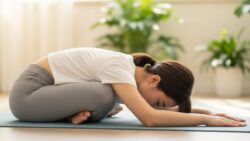
4. Child’s Pose (Balasana)
How does Child’s Pose support better posture?
Child’s Pose is a restorative posture that allows the spine to gently stretch and relax. It releases built-up tension in the lower back, shoulders, and neck—areas that often affect posture. Regular practice helps reduce tightness and supports natural spinal alignment.
How to practice Child’s Pose:
– Begin on hands and knees with a neutral spine.
– Lower your hips back toward your heels.
– Fold your torso forward, resting your chest on or between your thighs.
– Stretch your arms forward and place your forehead on the mat.
– Take slow, deep breaths and relax into the pose.
Benefits:
– Releases tension from the back and neck.
– Gently stretches the spine and hips.
– Encourages deep relaxation and stress relief.
5. Bridge Pose (Setu Bandhasana)
How does Bridge Pose improve posture and spinal support?
Bridge Pose is a strengthening backbend that targets the glutes, lower back, and core while stretching the chest and shoulders. This pose is especially useful for posture improvement as it opens the front body and helps reverse rounded shoulders and forward-head posture.
How to practice Bridge Pose:
– Lie on your back with knees bent and feet flat on the floor, hip-width apart.
– Press firmly through your feet and lift your hips upward.
– Engage your glutes and core as you raise your pelvis.
– Interlace your fingers beneath your body or keep arms resting on the mat.
– Hold for several breaths, then slowly lower your hips down.
Benefits:
– Strengthens the lower back, glutes, and core muscles.
– Opens the chest and shoulders.
– Promotes proper spinal alignment and upright posture.